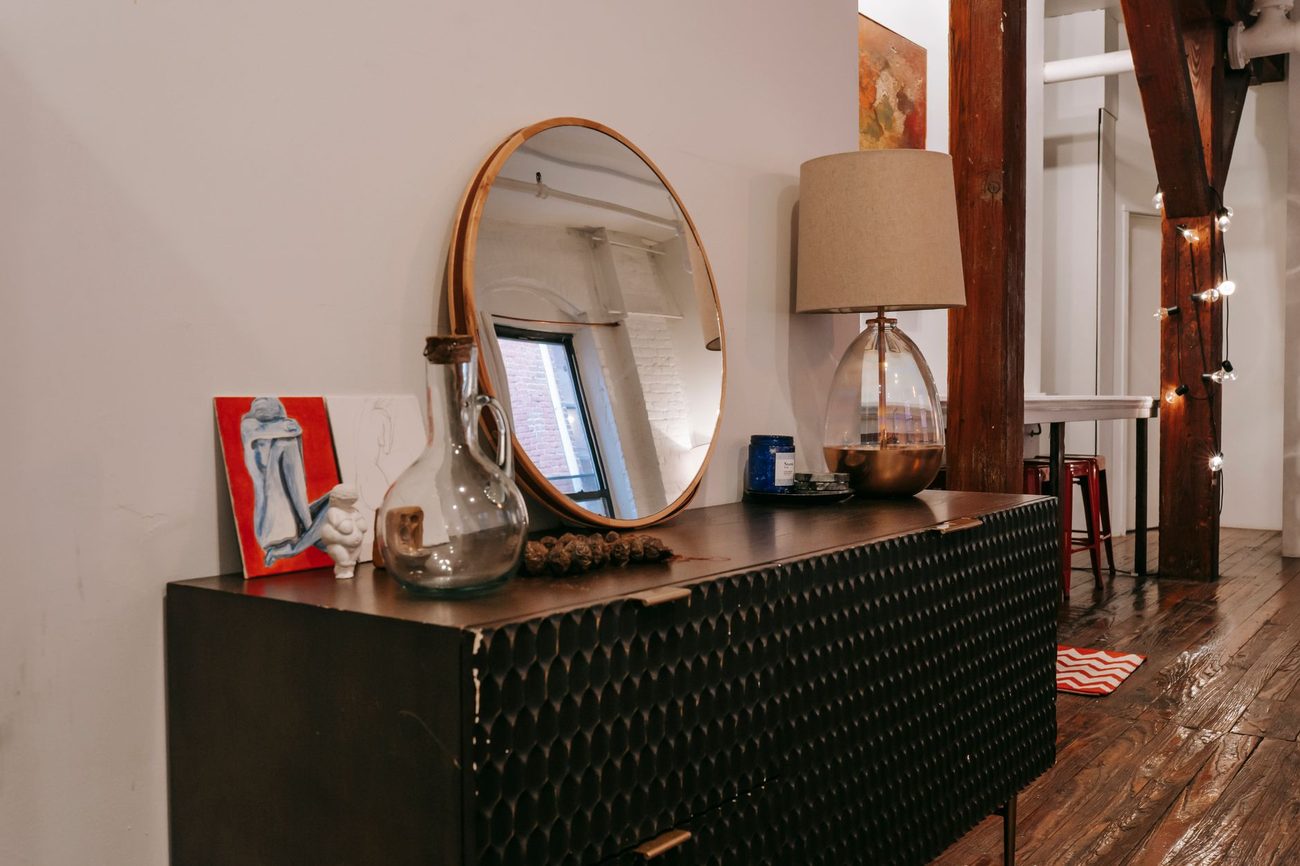
Secondhand furniture is where the biggest savings in a household live. A solid oak dresser that cost $900 new sells for $80 on a Sunday afternoon because someone is moving on Monday. A dining table that would be $1,200 in a showroom is $150 with a scratch nobody will see under a tablecloth. But not everything is worth hauling home, and the difference between a bargain and a mistake is mostly about what the piece is made of.
Look for solid wood
Solid wood furniture from the 1950s through the 1990s was built to be moved, refinished and used for decades. It survives a second and third home. Check the edges and the inside of drawers: solid wood shows grain that continues around corners, and the drawer sides are usually a different, lighter wood. Veneer over plywood is acceptable for tabletops and case pieces if the veneer is intact; it is a real construction, not a cheap one.
Skip particleboard entirely
Flat-pack furniture made of particleboard or fiberboard does not survive disassembly and reassembly. The screw holes strip, the backs bow, and the corners crumble at the first knock. It is cheap for a reason, and secondhand it is not cheap enough. If a listing photo shows a laminated surface with a paper-thin edge, or the item is a brand you would find in a flat box, leave it.
The inspection
- Dovetail joints in drawers mean quality construction. Stapled or glued butt joints mean the opposite.
- Drawers that slide straight and close fully. Sticking drawers can be fixed with wax; drawers that have been forced and cracked cannot.
- Chairs that do not rock on a flat floor. Grab the back and try to twist it; any give at the joints means re-gluing, which is a job, not a dealbreaker, but price it in.
- Smell. Smoke and mildew do not come out of wood. Open a drawer and put your nose in it.
- Upholstery only in daylight. Look for stains, check the cushions for sagging, and look underneath for any sign of pests. If you cannot inspect it in good light, do not buy it.
What to bring
A tape measure, a flashlight, a blanket for the car and cash. Measure the doorway and the stairwell before leaving the house, not after paying. We once bought a sofa that fit the room and not the front door; it lived in the garage for a month.
Where the prices are
| Source | Typical price vs. new | Notes |
|---|---|---|
| Estate sales, second day | 10–20% | Best for solid wood; prices drop by half on day two |
| Marketplace listings from people moving | 10–25% | Most negotiable; time pressure is on their side |
| Thrift stores | 15–30% | Inconsistent; go often |
| Consignment shops | 30–50% | Curated, less bargaining, easier returns |
Refinishing
A dresser with a scratched top and good bones is worth more than a perfect one to someone with a sander and a Saturday. A quart of stain and a can of wax cost $30 and turn a $60 piece into something that looks like $600. Painting is faster and hides more, but it is permanent; stain first if the wood is nice.
Our house
The dining table, both dressers, the bookcases and the kids' desks are all secondhand solid wood, total spend under $500. The sofa and mattresses are new. That is the split we recommend: buy hard goods used and soft goods new, and you get a furnished house for the price of one showroom sofa.