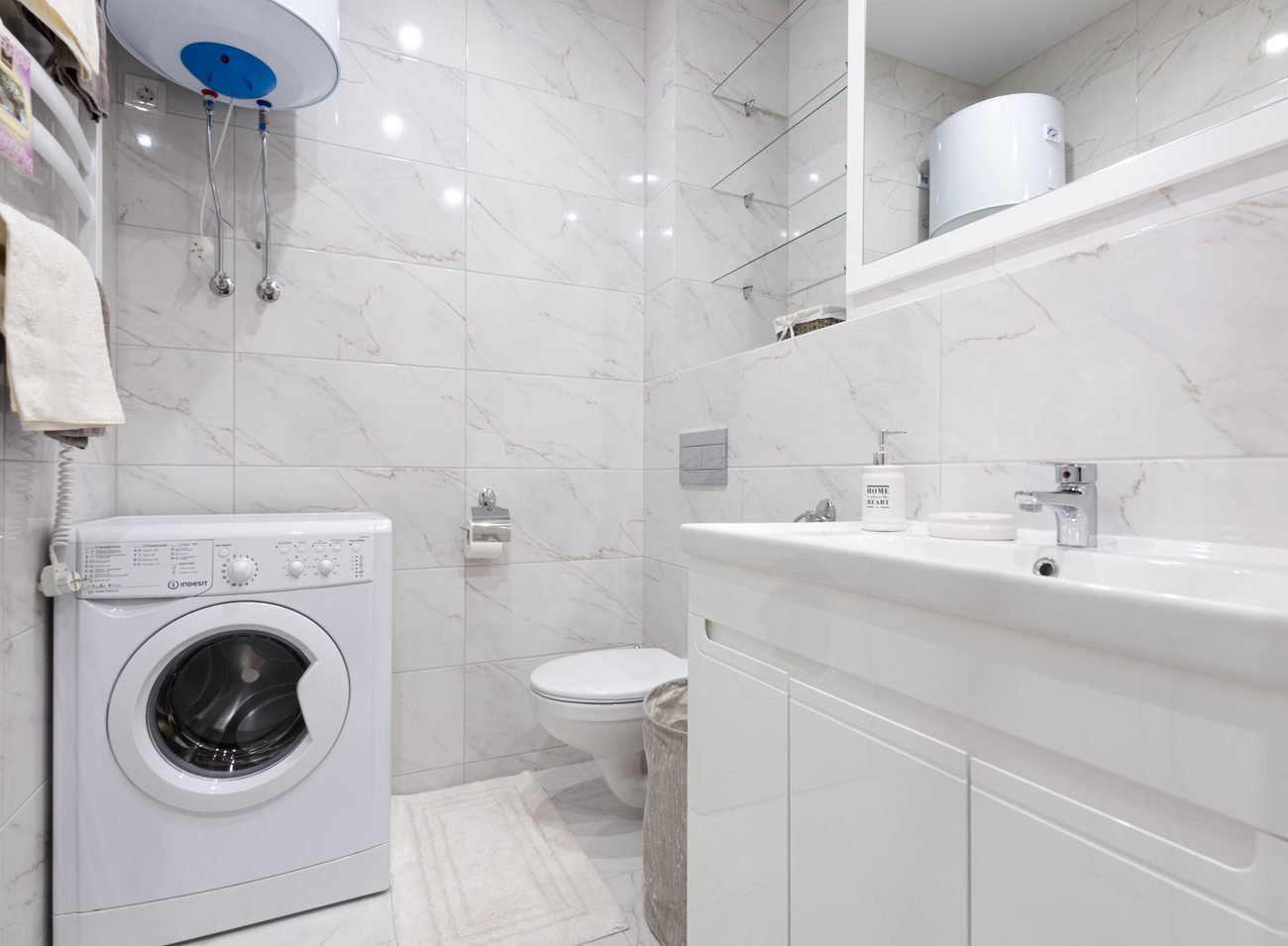
Water heating is typically the second-largest energy expense in a home, after heating and cooling the air. Most tanks are shipped with the thermostat set to 140 degrees Fahrenheit, which is hotter than anyone needs at the tap and hot enough to cause a serious burn in a few seconds. The dial that controls it is usually behind a small panel on the side of the tank, and in most houses it has never been touched.
We turned ours down to 120 on a Saturday morning. It took five minutes and a flashlight. The shower felt the same, and the water heating portion of our bill dropped by roughly five percent.
Why 120 works
Your shower is not delivered at the tank's temperature. The mixing valve at the tap blends hot and cold water to whatever you set. At 140 degrees, the valve uses less hot water and more cold. At 120, it uses a little more hot and a little less cold, and the result at the showerhead is identical. The difference is that the tank is not spending energy all day keeping 40 or 50 gallons twenty degrees hotter than necessary, including the hours nobody is home.
Standby loss, the heat that leaks from the tank into the room, is proportional to the difference between the water temperature and the air around it. Lower the water temperature and the loss goes down with it. This is why the saving happens even on days when nobody showers.
How to do it
- Electric tank: turn off the breaker first. Remove the access panel (usually two screws), fold back the insulation, and you will see a small dial marked with temperatures or letters. Many electric tanks have two, upper and lower. Set both to 120. Replace the panel and turn the breaker back on.
- Gas tank: the dial is on the gas valve near the bottom, often marked with A, B, C or a hot-warm range rather than numbers. Turn it down one notch, wait a day, and check the tap water with a cooking thermometer. Adjust until it reads about 120.
- Tankless: there is a digital control. Set it to 120 and you are done.
Check it with a thermometer
The dial is not accurate. Run the hot tap nearest the tank for a minute, fill a cup, and check it with a kitchen thermometer. Ours read 131 when the dial said 120, so we went down another notch. If you have a dishwasher without its own heater, most manufacturers are fine with 120; check the manual if you are unsure.
One caution
If someone in the house has a weakened immune system, some guidance suggests keeping the tank at 140 to limit bacteria growth, and adding a mixing valve at the tank outlet so the water reaches the taps at a safe temperature. For most households, 120 is the setting the U.S. Department of Energy recommends, and it is the safer one for anyone with small children or older relatives, because scald injuries at 140 happen faster than a person can react.
While you are down there
An insulating blanket for an older tank costs about $25 and cuts standby loss further. Insulating the first six feet of hot water pipe leaving the tank is another $10. And if the tank is more than twelve years old, it is worth starting a sinking fund for its replacement now, because it will fail on the coldest day of the year and it will not give notice.